The Old Point Loma Lighthouse Kitchen Garden: A Living Link to the Past
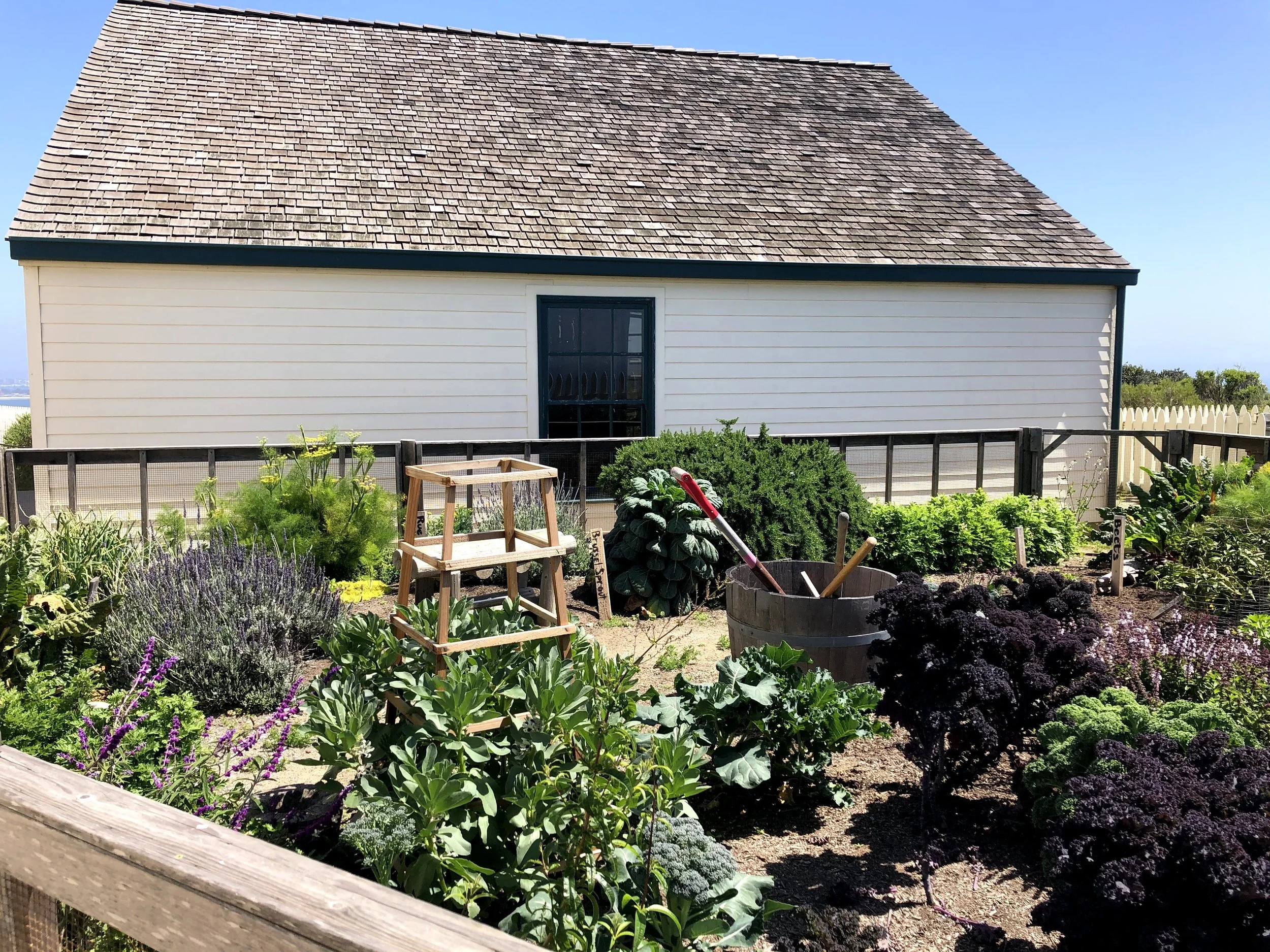
Tucked between the Old Point Loma Lighthouse and the Assistant Keeper’s Quarters lies one of Cabrillo National Monument’s most charming features: the Kitchen Garden. Once a crucial source of food for the lighthouse keeper and his family, the garden offers a window into the everyday resourcefulness required to live on the tip of Point Loma in the late 1800s.
Today, planted with leafy greens, flowering herbs, and seasonal fruits, the kitchen garden is an ever-changing exhibit that brings the past to life at Cabrillo National Monument.
Rooted in History
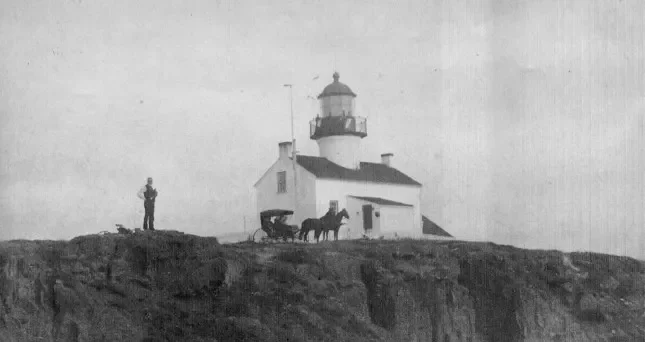
Old Point Loma Lighthouse with Robert Israel standing in front circa 1950s - 1960. Photo credit NPS.
From 1869 – 1891, Robert Israel lived and worked at the Old Point Loma Lighthouse as it’s keeper. For Robert, his wife Maria, and their children, the Kitchen Garden was an important source of fresh produce and herbs to supplement their household diet. Life at the tip of Point Loma was isolated, and acquiring fresh food required a 4-hour horse-and-buggy ride to reach the nearest town (which we now know as “Old Town San Diego”). Growing some of their own food on-site was a practical solution that made daily life a little more sustainable.
The Kitchen Garden that visitors see today is not the original, but a historic replica built in 1999 by Cabrillo National Monument Ranger, Debby Sherman, the Point Loma Garden Club, and a local scout troop. Over the years, it has become an important educational feature of Cabrillo National Monument, helping connect visitors with the lived experience of those who once lived and worked at the Old Point Loma Lighthouse.
Working Against the Elements
The environment at Cabrillo National Monument is a far cry from ideal growing conditions. With high winds, rocky soil, limited water, and dense fog, successfully growing produce in the Kitchen Garden is no simple task. “The garden is only nine inches from bedrock, and the winds coming off the ocean are constantly blowing the soil around. This means we frequently need to bring new soil to refresh areas that are becoming sparse.” Explained Pamela Zuckerman, lead kitchen garden volunteer, in a recent interview. The marine layer is another challenge. “The fog is the reason we get powdery mildew” says Zuckerman. “We can’t grow squash because of that.”
Because the garden is within a National Park, there are also limitations on crops; plants that are likely to spread beyond the garden fence are carefully avoided. Several years ago, Zuckerman worked with Cabrillo National Monument Science Technician, Patricia Simpson, to develop a list of things that cannot be grown in the garden for that reason, including artichokes, asparagus, and irises. Common gardening responses to pests are also limited. “We have fava beans growing that got aphids on them. We can’t spray anything, because it’s NPS land,” Zuckerman says. Instead, the garden relies on natural processes when possible. “Luckily, ladybugs came and ate them which was great!”
The difficult conditions faced by the garden today help inform our understanding of how the garden may have functioned in the past. Lighthouse keepers and their families would have navigated many of the same challenges, adapting what they grew to match the demands of this exposed coastal site and relying on hardy crops, such as root vegetables, that could better withstand such fraught conditions.
A Growing Exhibit

Part of what makes the kitchen garden so special is its relatability.
“It is a beautiful display garden,” Zuckerman says. “Visitors can relate the garden to what they might grow at home. It gives them another layer of connection to the park.”
That connection is especially meaningful for younger visitors. Garden volunteer, Lee Somerville recalls, “When we have children visiting, we let them pick carrots and smell the herbs. Some of them have never been near a garden before and they get so excited to see things growing!”
Unlike a static historical exhibit, the kitchen garden changes constantly. It reflects the seasons, the weather, and the work of the volunteers who care for it. Plant markers beside each species identify what is currently growing, helping visitors understand what they are seeing and connect it to the larger historic narrative of life at the Old Point Loma Lighthouse.
Sustained by Volunteers, Supported by CNMF
For nearly 25 years, Cabrillo National Monument Foundation has been proud to support the Old Point Loma Lighthouse Kitchen Garden as part of its commitment to preserving and enhancing meaningful visitor experiences at the park.
As the official nonprofit partner of Cabrillo National Monument, CNMF helps sustain projects and programs that connect visitors to the history, environment, and significance of this remarkable park. The kitchen garden is a perfect example of that mission in action.
This garden takes ongoing care, planning, and stewardship to keep it healthy and welcoming to visitors. CNMF is honored to support that work and the dedicated volunteers who care for the garden every day.