
A Winter Guide to Gray Whale Watching at Cabrillo National Monument
Every winter, something extraordinary happens just off the cliffs of Point Loma: more than 20,000 grey whales (Eschrichtius robustus) begin their annual migration south, swimming past Cabrillo National Monument on their way to the warm lagoons of Baja California to breed and nurse their young. For locals and visitors alike, this migration is one of the most magical natural events of the season, and Cabrillo National Monument is one of the very best places to experience it from.
Land-based whale watching is a time-honored tradition at Cabrillo National Monument, dating back to 1955, when Cabrillo National Monument was officially declared a public venue for observing grey whales. Ever since, generations of visitors have gathered along these cliffs to witness the annual migration, with thousands flocking to the park each January to celebrate Cabrillo’s annual Whale Watch festival, sponsored by Cabrillo National Monument Foundation.
Whether you have spotted countless grey whales from shore in years past, or this is your first time setting out, this guide is for you!
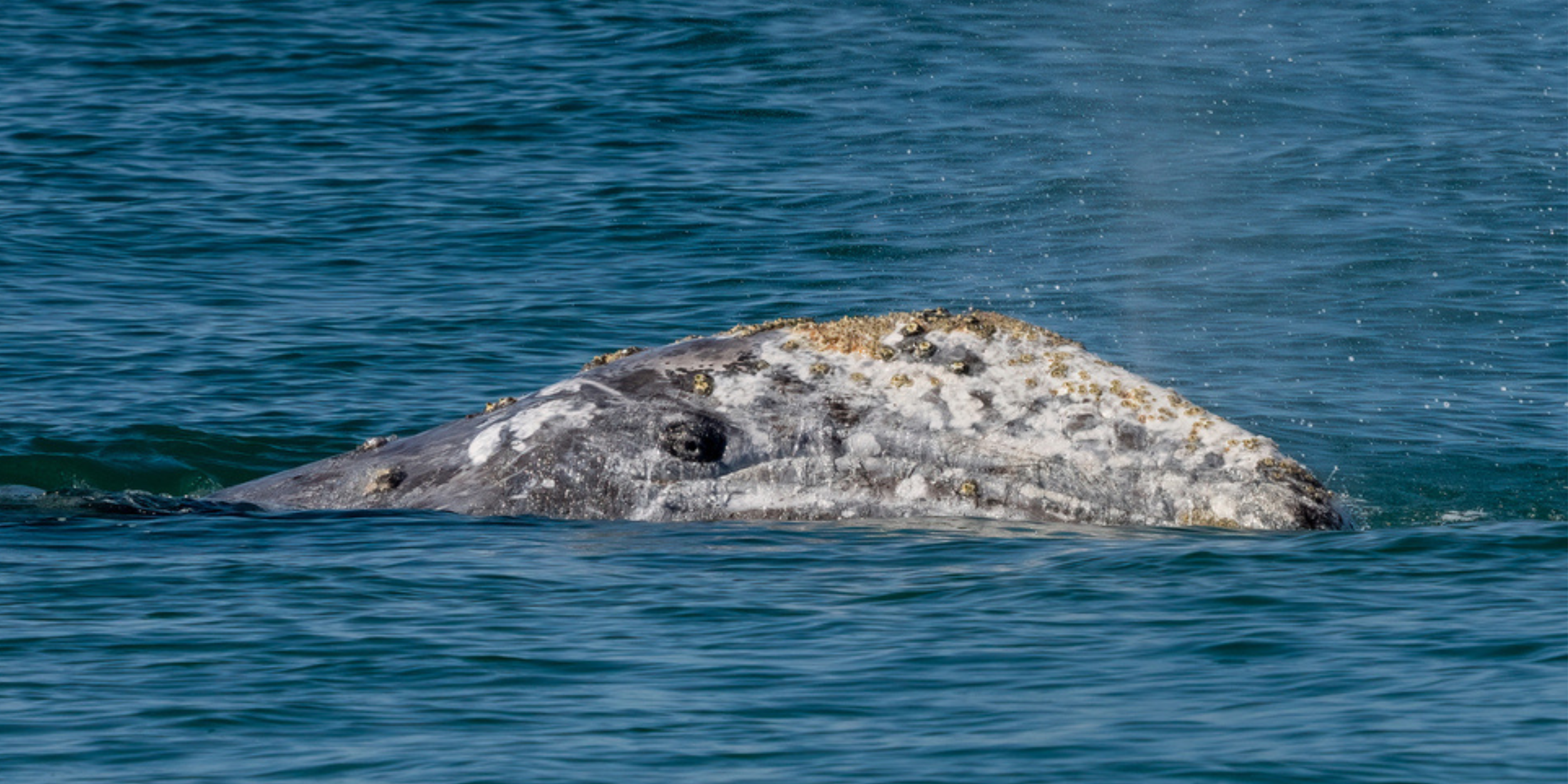
Photo credit: iNaturalist user andrealikesbirds
Gray Whale Watching Season at Cabrillo
Luckily for all of us “grey whale spotting hopefuls,” grey whales are remarkably consistent travelers. After spending the summer feeding and building up blubber in the waters off Alaska and Siberia, grey whales begin their southbound migration in the fall.
Migrating grey whales typically arrive off the San Diego coastline in late December, with migration peaking in mid-January. These reliable migratory patterns make winter (especially mid-January) the ideal time for land-based whale watching at Cabrillo National Monument.
Where to Whale Watch at Cabrillo
One of the reasons Cabrillo is such a special place for land-based whale watching is its elevated coastal views and proximity to the migration route.
The Whale Watch Overlook is the park’s premier spot for spotting gray whales. Located along the western edge of the park, this overlook provides sweeping views of the Pacific Ocean and sits directly along the whales’ migratory path.
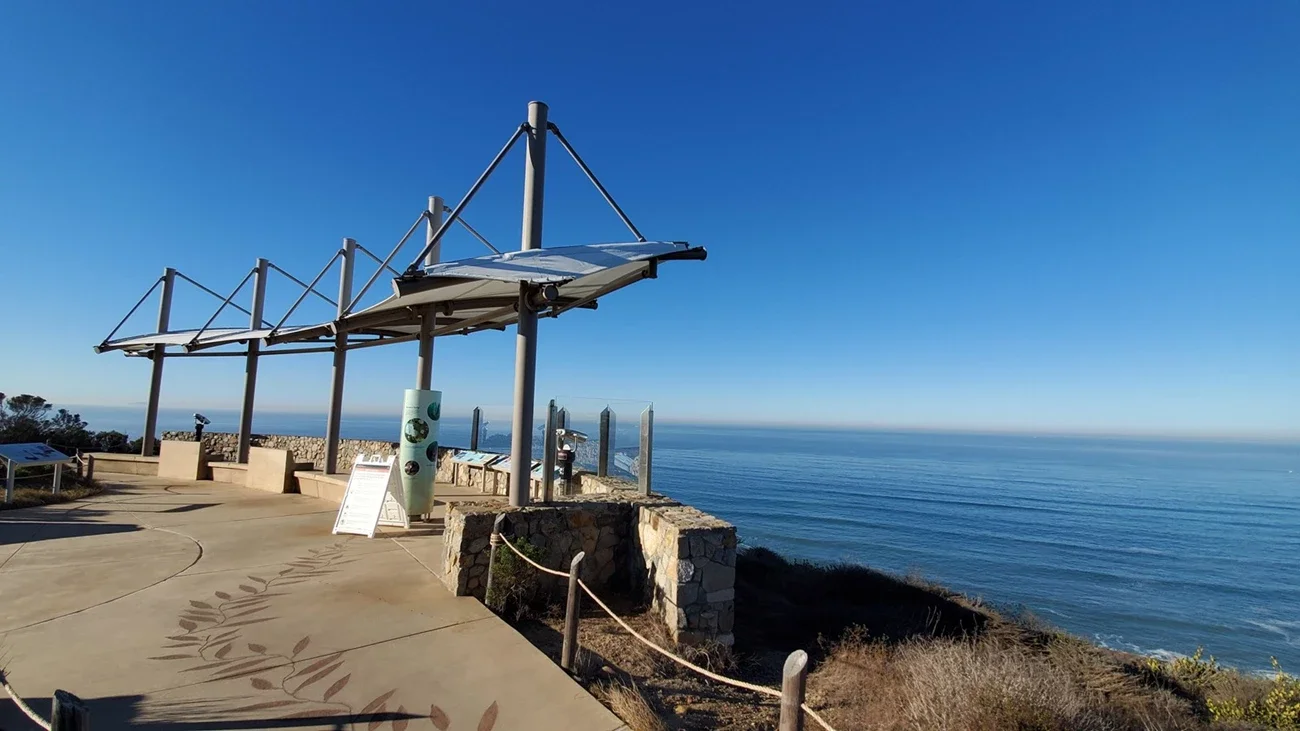
Whale Watch Overlook. Photo Credit NPS / T. Jordan
Visitors can access the whale watch overlook by:
Walking up The Oceanside Trail, a steep 0.5-mile hike starting near Parking Lot 1, just before the tidepools
Walking along the paved path from the main parking lot, passing behind the Old Point Loma Lighthouse
From the overlook, whales can be visible just a few hundred yards offshore.
Land-based Whale Watching Tips
You don’t need special equipment to spot a grey whale (though binoculars are helpful). What you do need is a little patience and an eye for their telltale signs and behaviors.
Look for:
Spouts: When a gray whale surfaces to breathe, it exhales warm, moist air from its lungs. When that air meets the cool ocean air, it creates a bushy column of mist known as a blow or spout. A gray whale’s spout can reach up to 15 feet high and is heart-shaped due to their characteristic double blowhole.
Sounding: Before a long, deep dive, gray whales often lift their broad tails, called flukes, out of the water to help propel them downward. Dives can last 3-7 minutes. After a whale dives, set a timer or check your watch, and scan the water in the direction the whale was headed.
Breaching: On occasion, gray whales will launch much of their body out of the water, before crashing back down in a dramatic splash. This behavior isn’t fully understood, but it’s always an exciting sight.
Spyhopping: Grey whales will sometimes lift their heads out of the water and peer around their surroundings for 30 seconds or so. This behavior is more common in the shallow lagoons in Baja California, as they can rest their flukes on the ocean floor.
Helpful tip #1: in the winter, Grey Whales are traveling South. If you are facing west toward the ocean, whales will be moving from right to left across the horizon.
Helpful tip #2: Mornings and calm-weather days can increase your chances of spotting a whale, as choppy waters can make it harder to sign whale movements such as spouts and flukes. Overcast days can also offer a slight whale spotting advantage, as the ocean glare on sunny days can obstruct visibility.
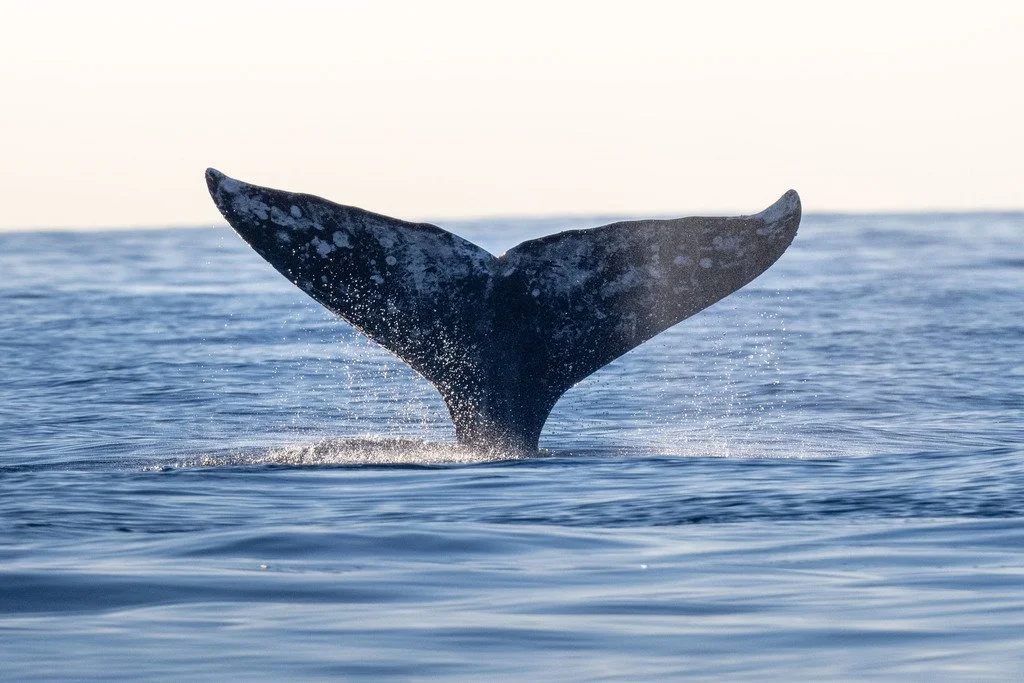
Grey Whale Fluke. Photo credit: iNaturalist user anewmark
What to Know Before Your Visit
Cabrillo National Monument is an urban park located on the southernmost tip of the Point Loma Peninsula where coastal weather conditions can change quickly.
To stay comfortable and be prepared during your visit, consider:
Dressing in layers, the ocean breezes can make a sunny day feel chilly
Bringing binoculars if you have them
Packing snacks and water, there are no food or drink retailers inside the park
Lastly, be patient! Land-based whale watching takes time, and sightings are never guaranteed (even if you follow this guide verbatim).
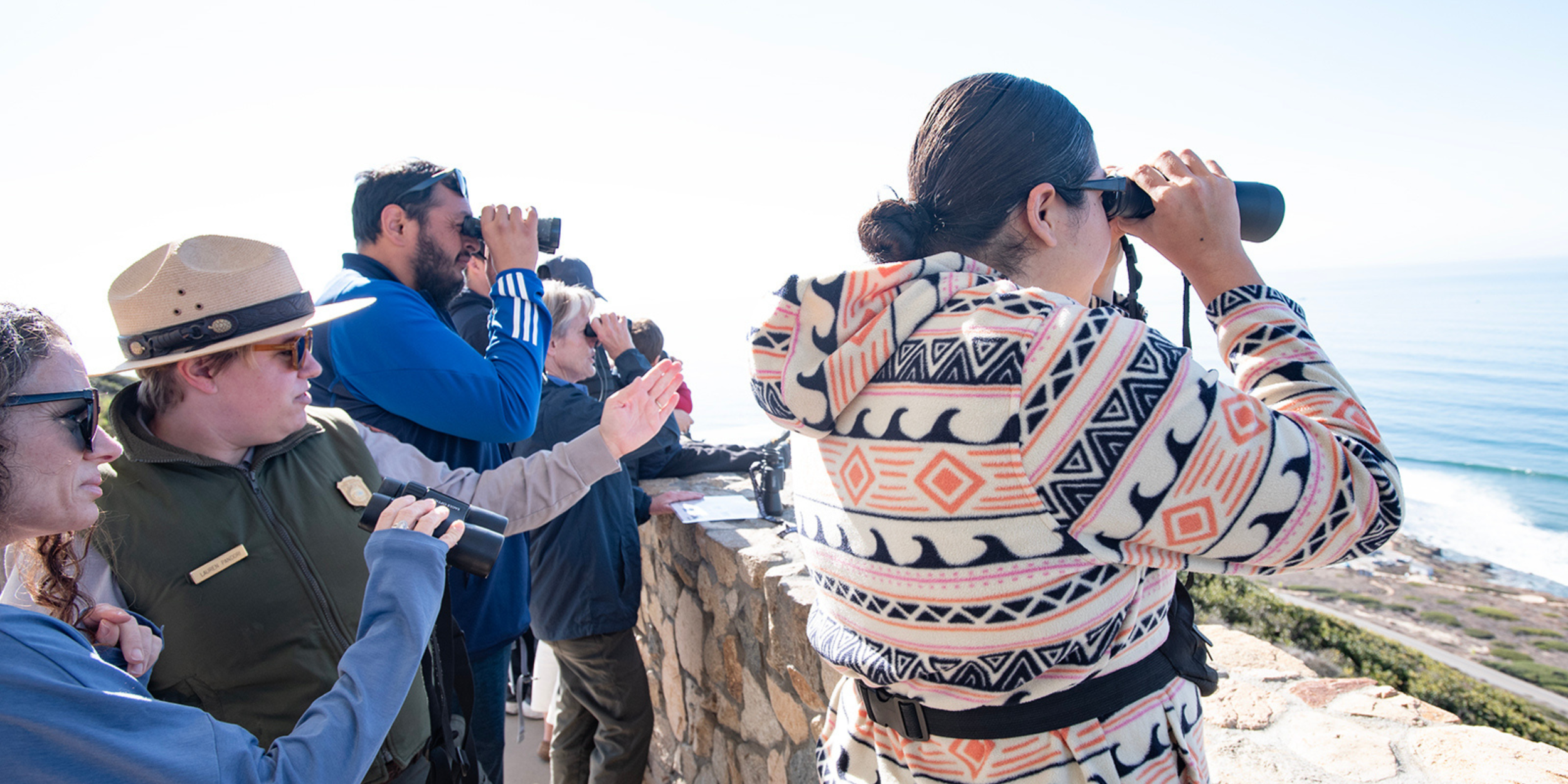
NPS Ranger helping visitors spot grey whales. Photo credit: Gary Severt
Support Conservation with a Whale Watching Adventure
Looking to experience whales from the water as well? Our friends at Wild Pacific Whale Watch are hosting a fundraising whale-watching tour to support Cabrillo National Monument Foundation on January 24, 2026.
This is a special opportunity to see migrating gray whales up close while supporting the preservation, education, and conservation efforts that help protect Cabrillo National Monument. Learn more and purchase tickets here.
Whether you’re visiting for the first time or returning year after year, Cabrillo offers a front-row seat to one of nature’s most remarkable migrations. We hope this guide helps you make the most of your visit, and inspires you to slow down, scan the horizon, and enjoy the magic of winter along the Point Loma coast!